Federal Tax Credits for EV Charger Installation: What Virginia Homeowners Need to Know
Electric vehicles are becoming a common sight across Virginia, from Northern Virginia suburbs to communities throughout the Commonwealth. As more homeowners make the switch to electric transportation, home charging has become a practical necessity rather than a luxury. Installing a Level 2 EV charger at home provides faster charging, greater convenience, and better control over energy use compared to relying solely on public charging stations.
Many Virginia homeowners are surprised to learn that federal tax incentives may help offset part of the cost of installing residential EV charging equipment. Understanding how these incentives work, what expenses qualify, and what limitations apply can make a meaningful difference when planning a charger installation project.
If your home requires electrical upgrades before adding an EV charger, working with a licensed electrical contractor such as A Good Electrician LLC can help ensure the installation meets current code requirements and manufacturer specifications. Any EV charger installation or electrical panel modification should be performed by a trained and licensed electrician to ensure safety and compliance.
Understanding the Federal EV Charger Tax Credit
The primary federal incentive available for residential EV charger installations is the Alternative Fuel Vehicle Refueling Property Credit, found under Internal Revenue Code Section 30C.
This tax credit was expanded and modified through the Inflation Reduction Act, which extended availability through 2032. The program is designed to encourage the installation of charging infrastructure for electric vehicles and other alternative-fuel transportation options.
For qualifying homeowners, the credit may cover up to 30% of eligible installation costs, subject to certain limits and location requirements. Unlike a rebate that provides money upfront, this incentive functions as a tax credit claimed when filing a federal income tax return.
A tax credit directly reduces the amount of federal income tax owed. This makes it generally more valuable than a tax deduction, which only reduces taxable income.
Homeowners considering an EV charger installation should understand that eligibility depends on more than simply purchasing charging equipment. The location of the property and the nature of the installation also play important roles in determining qualification.
How the Tax Credit Works for Homeowners
For residential installations, eligible taxpayers may claim a credit equal to 30% of qualified expenses, up to a maximum credit amount of $1,000.
If a homeowner spends $2,000 on charger equipment and installation labor, the potential federal tax credit could be $600. If total qualified expenses reach $4,000, the calculated credit would be $1,200, but the residential credit would generally be capped at $1,000.
The credit applies to equipment placed into service during the applicable tax year. Simply purchasing a charger does not necessarily qualify. The charger must be installed and operational before the end of the tax year for which the credit is claimed.
Taxpayers should retain documentation that supports the installation date, equipment costs, labor expenses, permits, and related electrical work. These records may be important if questions arise regarding the tax filing.
New Location Requirements Introduced by the Inflation Reduction Act
One of the most significant changes affecting EV charger tax credits is the introduction of geographic eligibility requirements.
Under current rules, qualifying property generally must be installed in an eligible census tract. This requirement was added by the Inflation Reduction Act and applies to chargers installed after January 1, 2023.
The federal government defines eligible census tracts as either:
- Low-income communities
- Non-urban census tracts
This means not every residential address automatically qualifies for the tax credit, even if the charger itself meets all technical requirements.
Many homeowners assume the incentive is universally available nationwide, but eligibility now depends heavily on the property’s location. Before proceeding with installation plans based solely on anticipated tax savings, homeowners should verify whether their residence falls within an eligible census tract.
The Internal Revenue Service and Department of Energy provide online tools that help determine location eligibility. These resources allow homeowners to enter an address and confirm whether the property meets current geographic requirements.
Which EV Chargers Qualify for the Credit?
Most commonly installed Level 2 residential charging stations qualify, provided they are designed for charging electric vehicles and meet applicable standards.
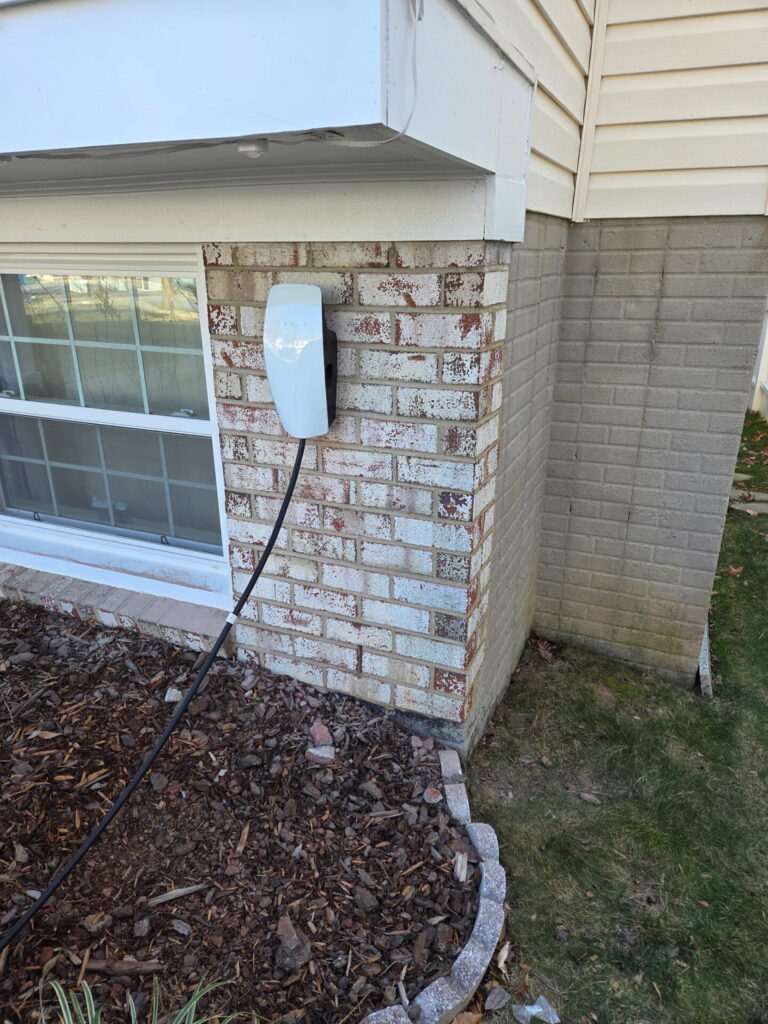
Popular residential charging equipment typically includes wall-mounted Level 2 chargers, smart EV charging stations with Wi-Fi connectivity, hardwired charging units, plug-in Level 2 charging equipment, and charging systems integrated with energy management platforms.
The equipment must be new. Used charging equipment generally does not qualify for the federal credit.
Homeowners should review manufacturer specifications and installation documentation to ensure the charger is intended for residential EV charging use and complies with applicable safety standards.
What Installation Costs Can Be Included?
Many homeowners focus only on the cost of the charger itself. Fortunately, qualified installation expenses often extend beyond the charging unit.
Eligible costs may include the charging equipment and expenses directly associated with placing the charger into service.
Potential qualifying expenses may include:
- EV charging station purchase price
- Electrical wiring required for the charger
- Conduit and electrical materials
- Circuit breakers
- Electrical panel modifications directly related to installation
- Installation labor
- Permit fees where applicable
- Electrical inspection costs when required for the project
The inclusion of installation-related expenses can substantially increase the total amount eligible for the credit calculation.
Every installation is different. Some homes have sufficient electrical capacity and require minimal work. Others may need new circuits, longer wiring runs, or service equipment upgrades to safely support EV charging demands.
Any electrical modifications associated with charger installation should be performed by qualified electricians who understand local code requirements, load calculations, and manufacturer installation instructions.
Electrical Panel Upgrades and Tax Credit Considerations
One question Virginia homeowners frequently ask is whether panel upgrades qualify as part of the EV charger tax credit.
The answer depends largely on the relationship between the upgrade and the charging installation.
If a panel upgrade is necessary to install and operate the EV charger safely, associated costs may be considered part of the qualified installation expenses. Documentation demonstrating the connection between the upgrade and charger installation may be important for tax purposes.
Many older homes throughout Virginia were built with 100-amp electrical service. Depending on existing household loads and charging requirements, an electrical capacity evaluation may reveal that a panel upgrade is needed before a Level 2 charger can be installed safely.
A licensed electrician can perform a load calculation to determine whether the existing electrical system has adequate capacity or whether service upgrades are recommended.
Homeowners should consult a qualified tax professional regarding the specific treatment of upgrade costs within their individual tax situation.
Why Level 2 Chargers Are the Preferred Choice for Most Homes
Most residential EV charger installations involve Level 2 charging equipment rather than standard Level 1 charging.
Level 1 charging uses a standard household receptacle and typically adds only a few miles of driving range per hour. This approach may work for some drivers with limited daily mileage, but it can become inconvenient for households that depend heavily on their electric vehicles.
Level 2 chargers operate on a dedicated 240-volt circuit and provide substantially faster charging speeds. Depending on vehicle specifications and charger output, Level 2 charging can add dozens of miles of range per hour.
The faster charging capability makes overnight charging practical for most drivers. Homeowners can plug in their vehicles at night and start each morning with a fully charged battery.
These performance advantages explain why most homeowners seeking federal tax incentives are installing Level 2 charging systems rather than relying on standard wall outlets.
Additional Virginia Incentives and Utility Programs
Federal tax credits are not the only potential source of savings.
Utility companies occasionally offer rebates, incentive programs, time-of-use rate plans, or charging-related benefits for customers who install EV charging equipment.
Availability varies by utility provider and service territory. Program details can change over time, making it important to verify current offerings directly with the utility company before beginning a project.
Some utility programs encourage off-peak charging by offering reduced electricity rates during designated periods. Charging overnight during lower-demand hours may reduce long-term operating costs for EV owners.
Virginia residents should also monitor announcements from state agencies and local governments, as transportation electrification programs continue to evolve.
Combining federal incentives with utility-based programs may significantly reduce the overall cost of installing home charging infrastructure.
Documentation Homeowners Should Keep
Proper recordkeeping is essential when claiming any federal tax credit.
Homeowners should maintain organized records that document all aspects of the project. Good documentation can simplify tax preparation and help support eligibility if questions arise later.
Important records may include:
- Charger purchase receipts
- Contractor invoices
- Permit documentation
- Inspection reports
- Proof of payment
- Equipment specifications
- Installation completion records
- Utility rebate documentation if applicable
Electronic copies should be stored securely alongside physical records whenever possible.
Maintaining a complete project file can make the tax filing process much smoother and provide valuable documentation for future home improvements or property transactions.
Common Mistakes Homeowners Should Avoid
Several misconceptions can create confusion regarding EV charger tax incentives.
One common mistake is assuming every residential address qualifies automatically. The census tract requirement means eligibility must be verified before relying on expected tax savings.
Another mistake involves claiming expenses that are not directly related to charger installation. Only qualified costs should be included when calculating the credit.
Some homeowners also underestimate the importance of professional installation. Improper wiring, overloaded circuits, inadequate grounding, or incorrect breaker sizing can create safety hazards and potentially affect charger performance.
Attempting to install high-capacity charging equipment without proper electrical evaluation may lead to code violations or costly corrections later.
Finally, taxpayers should remember that tax credits are subject to IRS requirements and individual tax circumstances. Consulting a qualified tax professional remains the best approach for questions regarding eligibility and filing procedures.
Planning an EV Charger Installation in Virginia
Home charging continues to be one of the most valuable benefits of electric vehicle ownership. A properly installed Level 2 charging station provides convenience, faster charging speeds, and greater flexibility for daily transportation needs.
Federal tax incentives can help reduce installation costs, but homeowners should understand current eligibility requirements before beginning a project. The most important considerations include verifying census tract eligibility, determining which installation expenses qualify, maintaining proper documentation, and ensuring all electrical work complies with applicable codes.
A professional electrical assessment can identify whether the home’s existing service capacity is adequate, whether panel upgrades may be required, and what charging solution best fits the household’s driving habits.
As electric vehicle adoption continues to grow throughout Virginia, understanding available tax incentives can help homeowners make informed decisions and maximize the value of their investment in residential charging infrastructure.