How to Choose Between Backup Generator Wiring vs. a Whole-House Surge Panel
Protecting your home’s electrical system isn’t just about convenience—it’s about safety, reliability, and making sure expensive electronics and appliances are shielded from damage. Two of the most common solutions homeowners consider are backup generator wiring and whole-house surge protection panels. They serve very different purposes, yet many homeowners confuse them or assume one can replace the other. The reality is more nuanced, and the right choice depends heavily on your home’s needs, budget, and risk tolerance.
At A Good Electrician LLC, we regularly help homeowners in Northern Virginia with installations ranging from panel upgrades and surge protection to dedicated generator hookups. Because both systems involve direct work on your electrical infrastructure, they require planning, code compliance, and safe installation by licensed electricians. This article takes a modern, detailed look at both options to help you make an informed decision.
Understanding Backup Generator Wiring
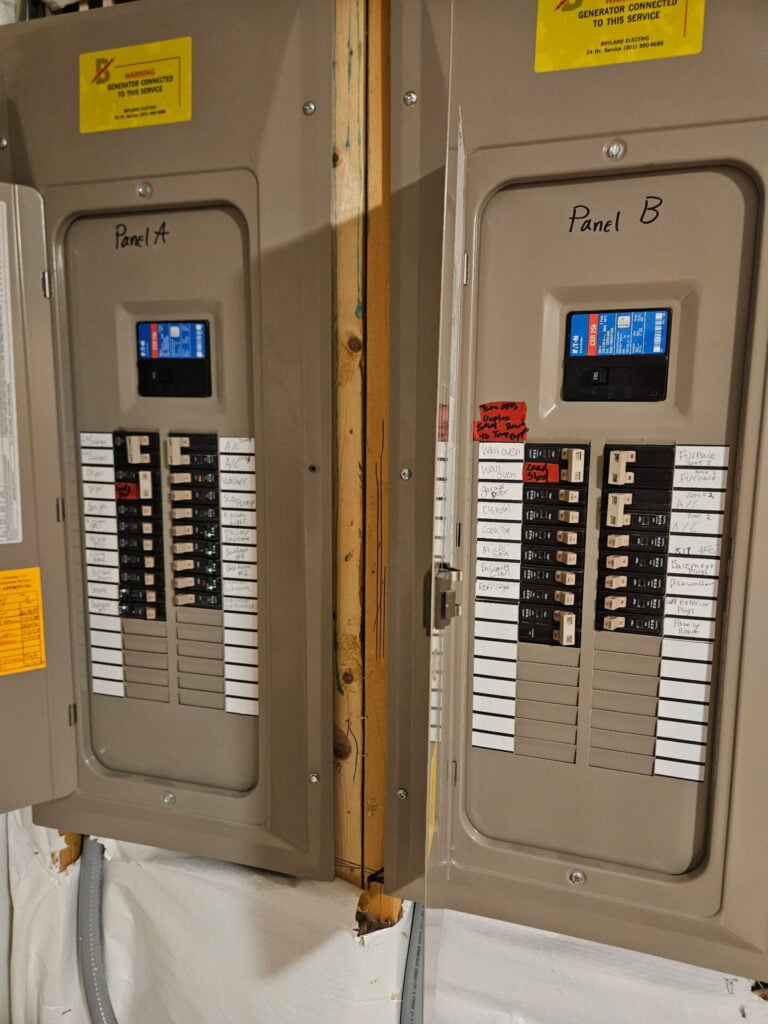
Backup generator wiring is not simply plugging in a portable generator during an outage. It involves a permanent or semi-permanent wiring solution that integrates the generator into your home’s electrical system. This usually means installing a transfer switch—manual or automatic—that safely shifts power from the utility grid to your generator.
The main purpose here is continuity. When the grid goes down, whether from a storm, accident, or planned utility work, the generator kicks in (automatically or with a manual switch, depending on the setup). That means your refrigerator keeps running, medical devices stay powered, lights stay on, and your heating or cooling system can operate. Without proper generator wiring, connecting a generator can be dangerous, leading to backfeeding into utility lines, electrical fires, or even injury.
Disclaimer: Backup generator wiring must always be installed by trained professionals. Attempting a DIY approach with this type of work is unsafe and can create serious hazards for both your household and utility workers.
Understanding Whole-House Surge Panels
Whole-house surge protection works on a completely different principle. Instead of providing power during an outage, a surge panel defends your home from sudden spikes in voltage. These surges can happen during lightning strikes, utility grid switching, or even from appliances inside your home cycling on and off.
Think of it as a shield that intercepts dangerous voltage spikes before they travel through your electrical panel and into sensitive electronics. Without it, a surge can fry a computer motherboard, ruin a TV, or shorten the lifespan of appliances like washing machines and refrigerators.
Unlike small plug-in surge strips, a whole-house unit sits at the electrical panel, providing protection for the entire home. It doesn’t guarantee zero damage in the case of a direct lightning strike, but it dramatically reduces the risk of surge-related destruction.
Disclaimer: Installing a surge panel requires working directly inside your electrical service panel, which should always be handled by licensed electricians to ensure safety and compliance with electrical codes.
The Key Differences Between the Two Systems
One of the most common misunderstandings is assuming a backup generator somehow provides surge protection or that a surge panel can substitute for backup power. In reality, they solve different problems.
A generator with proper wiring ensures you have electricity when the grid goes dark. It is a reliability measure. A surge panel, on the other hand, ensures that when the grid is alive, the power flowing into your home is clean and safe for your electronics. It is a protection measure.
The generator is an insurance policy against outages. The surge panel is an insurance policy against sudden spikes. Choosing between the two isn’t about one being “better” than the other, but about which risk—loss of power or damage from surges—you feel more urgent to address. Many homeowners eventually invest in both.
When to Prioritize Backup Generator Wiring
Backup generator wiring is usually the first priority for households where uninterrupted power is more than a convenience. If you or a family member rely on medical devices like oxygen machines or powered wheelchairs, the generator isn’t optional. The same is true for homes with extensive work-from-home setups where downtime translates directly to lost income.
In rural areas or neighborhoods with frequent outages, the case becomes even stronger. Food spoilage, lack of heat or air conditioning, and frozen pipes in winter can all be costly and dangerous. The peace of mind a generator provides in these cases far outweighs the cost of wiring and transfer switch installation.
That said, generators do require ongoing maintenance. Fuel must be stored properly (for portable units), oil changes are necessary, and automatic standby units need periodic inspection. The installation itself requires professional planning to ensure the generator’s output matches the home’s load and that the wiring complies with safety codes.
When to Prioritize a Whole-House Surge Panel
If you live in an area prone to thunderstorms, or if your neighborhood frequently experiences grid instability, a surge panel should be high on your list. Even a small voltage spike can silently damage electronics, reducing their lifespan without an obvious failure until months later.
Homes filled with modern devices—flat-screen TVs, gaming systems, smart refrigerators, HVAC systems with electronic controls—are particularly vulnerable. These devices are far more sensitive than older appliances and can be destroyed by surges that wouldn’t have caused issues decades ago.
Insurance often doesn’t cover electronics ruined by power surges. A whole-house surge panel adds a strong layer of defense, making it a wise investment even if you rarely experience complete power outages.
Cost Considerations
The price of backup generator wiring depends on the type of generator you choose. A portable generator connected with a manual transfer switch is the most budget-friendly option but still requires professional installation for safety. A whole-home standby generator with automatic transfer can cost several thousand dollars for the unit plus wiring and installation.
Whole-house surge panels, by comparison, are less expensive. A typical unit plus installation is often a fraction of the cost of generator wiring. For this reason, many homeowners install a surge panel first, then plan for a generator later when the budget allows.
Both should be seen as long-term investments. A generator protects against costly outages, while a surge panel protects against expensive equipment replacements.
Can You Have Both?
The short answer is yes. Many homeowners benefit from installing both solutions. A surge panel can actually complement a generator, since generators can sometimes produce irregular power during startup or under load, leading to minor surges. Having surge protection in place can extend the life of your generator-powered devices as well.
Pairing the two means you’re protected in both scenarios: when the grid fails, and when the grid delivers unstable or surge-prone electricity. It’s not an either/or question for many homeowners, but rather a matter of which one to install first.
How to Decide What’s Right for Your Home
The best approach is to assess your risks realistically. Ask yourself:
- Do you live in an area where outages are frequent and long-lasting?
- Are there medical or work-from-home needs that demand uninterrupted power?
- Does your home contain expensive electronics or appliances that would be difficult to replace if damaged?
- Have you noticed flickering lights, breaker trips, or other signs of grid instability?
Your answers will usually guide the choice. If outages are rare but thunderstorms are common, a surge panel is the better starting point. If outages disrupt your life regularly, generator wiring takes priority. And if both are real risks, a phased plan that installs one now and the other later may be the smartest move.
Final Thoughts
Backup generator wiring and whole-house surge protection aren’t competing technologies. They’re complementary solutions that address two very different electrical vulnerabilities. Choosing one over the other comes down to your home’s specific risks and priorities, but many homeowners eventually find value in having both.
Because both installations require direct work with your electrical panel and potentially hazardous power connections, these are not DIY projects. Always consult with a licensed electrician who can assess your home’s electrical system, recommend the right equipment, and install it safely. A professional installation not only ensures code compliance but also maximizes the reliability of the protection you’re investing in.